

Marine Safety Solutions: Fire Protection & Intelligent Systems for High-Risk Operations
A practical guide for industrial facilities on selecting fire suppression, life-saving appliances, and intelligent safety systems for high-risk marine operations.
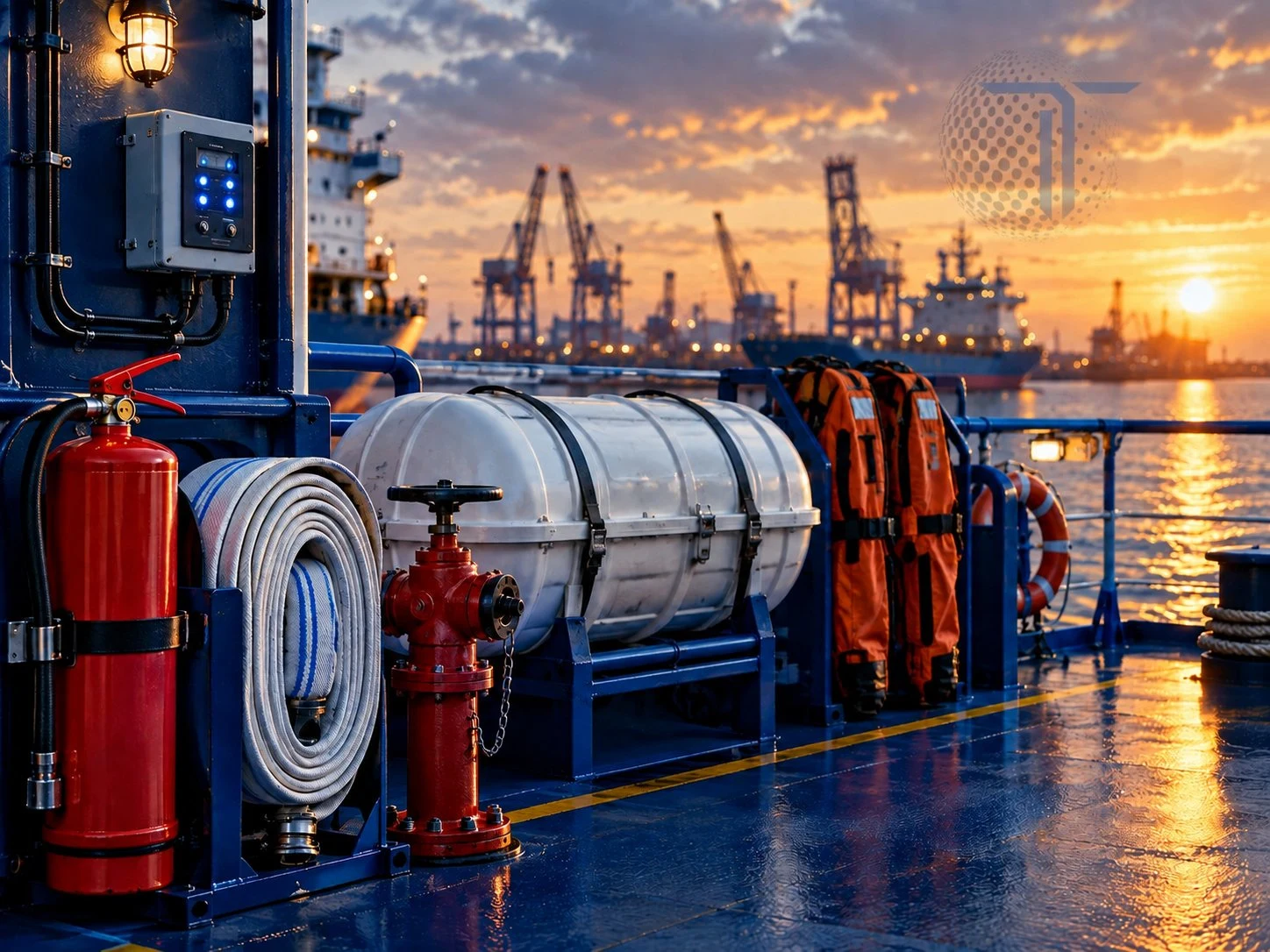
Fire protection and intelligent monitoring systems are the backbone of safe operations aboard vessels and at marine industrial facilities.
Marine and industrial facilities operate in some of the most demanding environments imaginable. Confined spaces, flammable cargo, high-voltage machinery, and constant exposure to saltwater and vibration all combine to create elevated fire and safety risks. Choosing the right combination of fire protection equipment, life-saving appliances, and intelligent monitoring systems isn't just a compliance checkbox — it's a critical decision that protects lives, cargo, and business continuity.
This guide breaks down the key considerations facility managers, safety officers, and vessel operators should evaluate when building or upgrading a comprehensive marine safety program.
1. Understanding the Risk Profile of Your Operation
Before selecting any equipment, it's essential to conduct a thorough risk assessment specific to your facility or vessel type. High-risk operations — such as offshore platforms, tankers, engine rooms, and chemical storage areas — each present unique fire and safety challenges.
- Fuel and chemical storage: Requires specialized foam or gas suppression systems designed for flammable liquid fires.
- Engine rooms and machinery spaces: Demand rapid-response fixed fire suppression combined with heat and smoke detection.
- Confined and enclosed spaces: Require oxygen and gas monitoring in addition to standard fire detection.
- Cargo holds: Often need CO2 or inert gas flooding systems depending on cargo classification.
A proper risk assessment should be conducted by qualified marine safety professionals and revisited regularly as operations, cargo types, or regulations change.
2. Core Fire Protection Systems for Marine and Industrial Facilities
Fixed Fire Suppression Systems
Fixed systems — including water mist, foam, CO2, and clean agent suppression — are designed to activate automatically when a fire is detected in a protected space. Selecting the correct suppression medium depends on:
- The type of combustible material present (Class A, B, C, or electrical fires)
- Whether the space is normally occupied
- Environmental and equipment sensitivity (e.g., avoiding water damage to electronics)
Portable Firefighting Equipment
Even with fixed systems in place, portable extinguishers, fire hoses, and hydrant systems remain a vital first line of defense. Facilities should ensure:
- Extinguishers are matched to the specific fire class risks in each zone
- Equipment is inspected and certified on a routine schedule
- Personnel are trained on proper deployment procedures
Fire and Gas Detection Networks
Early detection dramatically reduces the severity of an incident. Modern detection networks combine heat sensors, smoke detectors, flame detectors, and gas sensors into a single monitored system that can trigger alarms, suppression, and ventilation shutdowns automatically.
3. Life-Saving Appliances: The Last Line of Defense
When prevention and suppression aren't enough, life-saving appliances (LSAs) ensure personnel can evacuate safely. A well-equipped facility or vessel should maintain:
- Lifeboats and rescue boats that are regularly serviced and load-tested
- Life rafts with current certification and accessible stowage
- Personal flotation devices and immersion suits sized and stocked for full crew capacity
- Emergency lighting and signage to guide evacuation in low-visibility conditions
Routine servicing intervals for LSAs are often dictated by regulatory bodies, but facilities operating in high-risk zones should consider more frequent inspections than the minimum requirement.
Regularly inspected life-saving appliances ensure crews are prepared for worst-case scenarios.
4. Intelligent Safety Systems: The Next Generation of Protection
Modern facilities are increasingly integrating intelligent safety technology that goes beyond passive detection. These systems use networked sensors, automated controls, and real-time data to reduce response times and improve situational awareness.
Key features to look for include:
- Centralized monitoring dashboards that consolidate fire, gas, and security alerts into one interface
- Automated shutdown sequences that isolate ventilation or fuel lines the moment a hazard is detected
- Remote diagnostics that allow safety teams to verify system health without manual inspection
- Integration with security systems such as access control and CCTV for a unified emergency response
Intelligent systems are particularly valuable for facilities operating around the clock with limited on-site personnel, as they extend monitoring coverage without requiring additional staffing.
5. Building a Safety Apparel and PPE Program
Fire protection systems and evacuation equipment are only part of the equation — personnel also need to be equipped with the right personal protective equipment (PPE) for daily operations and emergency response. A strong PPE program typically includes:
- Flame-resistant coveralls and workwear rated for the specific hazards on site
- Specialized footwear designed for wet, slippery, or chemically exposed environments
- Head, eye, and hearing protection appropriate to machinery and confined-space work
- Gas detection badges or personal monitors for high-risk atmospheres
6. Working with Qualified Safety Partners
Selecting, installing, and maintaining fire protection and intelligent safety systems is not a one-time purchase — it's an ongoing partnership. When evaluating a supplier or service provider, facilities should ask:
- Do they hold relevant marine and industrial safety certifications?
- Can they provide documented maintenance and inspection histories?
- Do they offer emergency response support beyond standard business hours?
- Can their systems scale as the facility grows or regulations evolve?
A trusted safety partner should be able to support everything from initial system design and equipment supply through to inspection, servicing, and emergency inquiries.
Final Thoughts
High-risk marine and industrial operations demand a layered safety strategy — combining robust fire suppression, well-maintained life-saving appliances, intelligent monitoring technology, and properly equipped personnel. Facilities that invest in comprehensive, well-integrated safety systems not only meet regulatory obligations but also build a stronger foundation of protection for their crews, assets, and long-term operations.
Regularly reassessing your risk profile and safety technology ensures your facility stays ahead of evolving hazards rather than simply reacting to them.